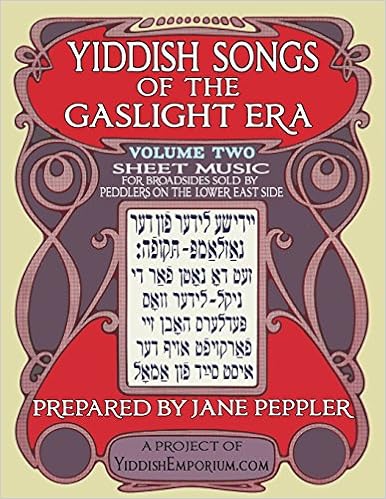
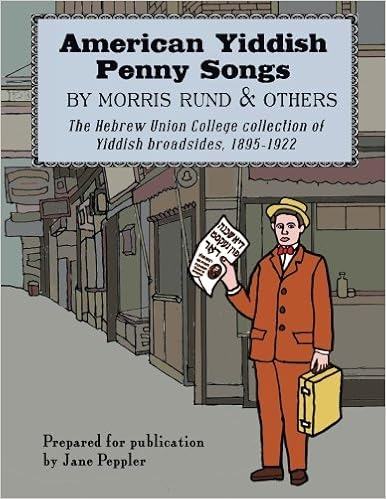
Researching Yiddish penny songs (tenement song broadsides of theater and variety show songs, 1895-1925)
About this project ♦ ♦ About Jane Peppler
List of the still-lost songs: do you know any of them?
Search the blog:

Saturday, March 30, 2019

Der yidisher voluntir - that famous Jewish hero of the Spanish-American War of 1898.

Another weird gem from Lider Magazin, Issue 4, probably 1899 (the cover page with the date is missing).

Der yidisher voluntir was written by Louis Kopelman especially for Boris Thomashefsky. It's a tear-jerker set in Cuba during the Spanish-American war, with a Jew who charges into battle right after his left hand has been torn off, to "save his fatherland." I'm glad I don't have to defend or justify any of this.

We're instructed it's to be sung to the tune of Break The News To Mother, published in 1897 by Charles K. Harris. Wikipedia notes: "Originally Harris wrote the song about a fireman. After the USS Maine explosion in Havana Harbor in 1898, Harris rewrote it with a soldier in place of a fireman."

The song was popular during the American invasion of Havana, and it was re-issued and popular once more during World War I.

It's an interminable song but I endured singing the whole thing so you too could shake your head at its peculiarity. As is typical of the time, the lyrics are a very Germanic Yiddish. Thanks to my Mappamundi bandmates, Ken Bloom on guitar and Jim Baird on bass.


Translation of the Yiddish and lyrics in transliteration after the jump.


>>>>>READ MORE >>>>>

Labels: , ,

Tuesday, May 29, 2018

New digital-only cd of Yiddish Penny Songs from the turn of the twentieth century: Opgenarte velt

As you know I chug along recording rare songs as my mental state allows - since the advent of our current US regime it's been substantially more difficult and for several months I was so depressed I couldn't talk, let alone sing. Still, the pile of songs built up and yesterday I compiled two cds. Here is the first, Opgenarte Velt (Deluded World). Only $7 and comes with 18-page liner notes pdf file with the transliterated Yiddish lyrics and English translation. Click on picture to visit and listen.


Contents (all these songs have appeared on the blog):

1. Shtek arayn (Put 'er there!) 03:22
2. Uptown, Downtown 01:08
3. Mener, mener! (Men, men!) 04:14
4. Di opgenarte velt (The Deluded World) 02:58
5. A mentsh zolstu nor zayn (A mentsh zol men zayn) (Be a decent person) 03:19
6. Eylu voeylu (A Drinking Song) 02:33
7. In hundert yor arum (100 years from now) 04:08
8. A mentsh ken dokh makhn a mol a toes (A person can sometimes make a mistake) 02:32
9. Vos kh'hob gevolt hob ikh oysgefirt (What I wanted, I got) 02:35
10. Alts far gelt (Everything For Money) 02:44
11. Di zibn boarders (The Seven Boarders) 04:42
12. Mentshn-freser (Devourer of People) 05:02


For sheet music and/or performances contact me: jane@mappamundi.com

Labels: , , , , , , , , , , , , , , , , ,

Tuesday, October 3, 2017

HIt aykh, meydlekh! (Beware, girls!) Yiddish theater song sung by William Schwartz, 1922

Transliterated as Hit eich and Hit aich meidelach (Girls beware), the song was published in 1922. Music Sholom Secunda, lyrics Anshel Shorr, who wrote the show it was from: An oyg far an oyg (An Eye for an Eye).

As usual, a girl who does not stay home quietly obeying her mother ends up in the hospital. The wages of sin...

In the show, Dora Weissman sang the song, but on this unfortunately awful sounding 78 it's sung by the magnificent William Schwartz. Hit aykh, meydelekh!


When I was just a child, I remember as if it were today,
I used to run around every minute with boys, playing in the street.
Laughing, fooling around, it wasn't nice.
That's what I've always been drawn to.
And sometimes I went to the movies and mother didn't know.
And when I went home, exhausted, so tired,
She sat me on her lap and sang me this song:

Girls, if life is dear to you, don't run around after a "good time"
Girls, protect yourselves as from fire. Kids, don't run away from home.
Girls, don't run along the evil path, because the shock will be too much for you.
Don't sell your innocence, girls, protect it like the eyes in your head.

I knew a girl, Rose, from a very respectable home,
She fell in love with a charlatan who promised to be her husband.
Her mother didn't like him. She ran away from home with him.
He promised her a wedding and seduced her. It was terrible.
Now she's lying sick in the hospital with a high fever.
And her mother hears how her feverish child sings a sad song:


For sheet music and/or performances contact me: jane@mappamundi.com

Labels: , , , , ,

Tuesday, September 20, 2016

In fremdn land (In a foreign land) - revenge of the deserted mother.

As you've noticed by now, Morris Rund's view of the world was bleak. In his songs, wives betray husbands, husbands slave away while their wives gobble oysters, and (here) bad husbands force their wives into prostitution. And all the time, complaints about the "new land" - if things were so great for him in Austria, why did he leave?

I recently posted a song about similar goings on in Argentina: Hert oys gute brider, in which a girl marries in Warsaw, hoping to improve her station in life, and then gets dragged to Buenos Aires to become lebedike skhoyre (lively or living merchandise).

There are SO many Yiddish songs warning girls about becoming too modern or independent. Samet un zayd is a classic - a girl goes with a guy because she'd like nice clothes, and in the second verse the ambulance is bringing her to the hospital in her finery and she expires.

The Rund text here was set to the melody of the Solomon Smulewitz mega-hit A brivele der mamen, a tearjerker about a guy who leaves home and has the good life in America and forgets his mother and then his mother up and dies. In THIS song, though, because it's a girl who leaves instead of a boy, it's she who dies.

Well, enough editorializing, here's the recording I made yesterday:


Transliteration and translation after the jump.

>>>>>READ MORE >>>>>

Labels: , , , , , , , , , ,

Friday, September 9, 2016

Farges nit kadish zogn (Sung to the tune of Shenkt a nedove)

This is the first song I'm posting since the end of a busy summer - one of the highlights was getting to present these penny songs at the Workmens Circle "Trip to Yiddishland" where I met a woman who actually remembered her uncle banging happily on the table while he sang Steam.

Farges nit kadish zogn is to be sung to the melody of a quite popular song from 1906, Shenkt a nedoveh, composed by Perlmutter & Wohl.

To hear the recording Roger and I did for Farges nisht kadesh zogn yesterday click this image:


By the way, there is different song also called Shenkt a nedove on the LOC site, and also by the way, on the cover here the title is transliterated Schenkt a neduwe but on the first page  the title is spelled Schenkt a ne du we.

My friend Roger Lynn Spears kindly played the piano part for me. You can hear his part again on a second song Morris Rund wrote to the same tune: Di korbones fun der shif titanik.

Transliteration and translation from the Yiddish after the jump:

>>>>>READ MORE >>>>>

Labels: , , , ,

Monday, May 9, 2016

A muters harts / a muters herts (A Mother's Heart) - one day late for Mother's Day.

This is a recording from 1915 of the song by Louis Friedsell and Louis Gilrod. It was sung in 1914 by Benny Zeidman and this recording is from 1915, by Jakob Medvedieff. I learned a new word, heykhler, from the German heuchler, hypocrite.

I had to retype the Yiddish words because the sheet music was virtually illegible. I may have screwed up, let me know.

This song is not found in the American Yiddish Penny Songs collection -- but the next song I'm recording is set to its tune.

Other spellings: A mutters hertz, A mutter's hehrts, etc.


People are given hours when they feel desolate, estranged from the world
Little hypocrites, masked smilers, friends who are only in it for the money.
The heart sickens, it gnaws and yearns
Seeking a friend who isn't pretending.
Now he doubly values his beloved mother
And her quiet dwelling.

She opens the door to him with endless love
kisses him tenderly like a mama and he says to her:

Mother's heart, mother's heart, your devotion is enormous
Mother's heart, your love is sweet and dear.
Highly valued, so dependable,
The most beautiful crown in the world
Is of course just a mother's heart

For sheet music and/or performances contact me: jane@mappamundi.com

Labels: ,

Friday, April 1, 2016

Dos shop meydl (The shopgirl) - another innocent girl ruined by a salacious bachelor.

Here's the first page of the songsheet for this song (click for a larger view), which I would call Dos shop meydl but in this publisher's dialect it is Di shop meydl.

The theme of warning women to preserve their virginity before marriage at the risk of shame, pregnancy, starvation and death is immortal.


The song sheet gives the underlying melody as "Yoseml, yesoymele," the sheet music for this song is at the Library of Congress website under the spelling Yusem'l Yesoimele (as sung with great success by Miss A. Zieman). You can hear this song at the FAU site sung by Alex Silberstein: Yusemel Yusomele


Here's the recording I made today. It's twice the speed it would have been performed back in the day, but what can I say, I don't have that kind of attention span:


Here's the transliteration and the translation:

>>>>>READ MORE >>>>>

Labels: , , , , , , ,

Thursday, March 24, 2016

Tate mamenyu, aka Tate mame's frayndshaft (Father and mother's friendship)

Songs like this were de rigueur in just about any operetta (click for a larger view).

This one is set to the melody Yoseml, yesoymele. I recorded one song set to this tune, Dos shop meydl, so if you feel the need to sing another song about how you'll never have a better friend... feel free.

This one appeared twice in the American Penny Song collection. Song sheet is below the translation.

>>>>>READ MORE >>>>>

Labels: , , , ,

Sunday, March 13, 2016

Di shtifmame (The stepmother) - a gruesome description.

Click the picture for a larger view and to enjoy the palmist and mindreader advertisement.

I'm a bit puzzled by this: Rund says he wrote the words and the "Stalen Brothers" wrote the music, but on Joe Feldman's recording the label says Rubin Doctor is the composer. Here is Joe singing this tragic song (also spelled Die Stief Mutter and Die Shtieff Mama). I myself had two stepmothers and they weren't this bad.


Feldman did not sing the second verse. See translation and songsheet below.

>>>>>READ MORE >>>>>

Labels: , , , , ,

Sunday, February 14, 2016

Dos yoseml sung by Simon Paskal

Click for a larger view of the sheet music cover. There were 11 musical numbers in this folio, a few of the others were also printed on broadsides and appear in the American Yiddish Penny Songs collection, this must have been a popular show. Words by Abraham Goldfaden, music by Louis Friedsell and Simon Mogulesco. It was Goldfaden's last show, mounted in 1908; he died that same year. It was somewhat based on George Eliot's novel Daniel Deronda. The sheet music is here: Goldfaden's Ben-Ami.

Spellings include: Das Jusemil; Yusemil; Dus yussemil. The broadside has Der Yoseml.

Simon Paskal seems to have recorded this song two or three times. It's a cool tune. Click to listen at youtube:


Here's the broadside, click for a larger view.


This lyric is kind of impressionistic, it didn't make a lot of sense to me but here's the gist as I understand it, I'd be happy to have somebody do a better job:

It was just yesterday I was having such a good time
When mother asked for me, father kissed and caressed me, his only child,
In the morning I'm in shul. "Where am I?" I ask as if I'm crazy.
The beadle whispers quietly to me, "Say kaddish now, little orphan."

My father, oh woe is me, my mother, oh woe is me,
I won't see them an more, I'm a lone orphan

You children of poor and rich fathers and mothers who love you,
They suffer a lot for you,
So you should value them highly,
You can buy gold and pearls, the most expensive diamonds,
You can also buy a friend
But you can't buy parents

Ben Ami's father lived for his child, he strove
If he had lived to see his child playing
The happiness made him weake
It brought his soul to God
His name like starlight
"Ben Ami" cried with laments
My father, oy, woe is me,
he is with God, oh woe is me,
I won't see him,
I don't have him,
I'm a lone orphan


For sheet music and/or performances contact me: jane@mappamundi.com

Labels: , ,

Jeykele, or, The Fifth Commandmant - a lugubrious, guilt-inducing Yiddish theater song

Alternate title: Jackele Mein Kind (Jackie My Child)

The recording is by Clara Gold. I couldn't find a picture of her. I imagine this song was recorded in her later years when she was playing the hefty mama roles which, luckily, there were a lot of. So here she is, click to listen:


The song is kind of dreadful to modern ears - slow, overwrought, loud (in the days before microphones, good vocal projection was the primary virtue). Clara sings only one verse: if she sang the whole thing, it would be about ten minutes long. Did anybody really sing the whole song, ever? They must have had much better attention spans than we have now.

Here's the songsheet (click for a larger version):


Here's a quick translation. Note Germanic vocabulary.

The word kaddish here means son - the son who is expected to say kaddish for his father some day.

[When] Jeykele was still young and small,
He'd steal pennies from his father.
The boy's father didn't spare the blows
The mama cried out, you could hurt the child
She used to close her eyes and suffer in silence
[Hoping] the father wouldn't hit his son [kadish]
And when she had the chance she would, off in a corner,
Grasp her child and say:

Jeykele, my dear child, obey your father, my dear son
Our great God will reward you if you behave well
God and respectable people will envy you
Remember, my son, the Fifth Commandment:
Because honoring your father and mother is a holy command
Remember, my child, and our great God
Will grant you long years
My dear child, you must remember
Honoring your parents is a holy commandment
And he who obeys is rewarded by our God

2
Jeykl grows up and laughs at his mother
He's become a fine thief:
He gets nabbed at a job and sent to jail
He's had enough, he now swears,
It doesn't help him, he wears a heavy chain,
He can go crazy with troubles there
The air presses down on him, at night in his sleep
He hears how his mother says to him with tears:

3
Jake has been free for a long time,
He has a wife and three children
He doesn't become better
He breaks a lock, the boss catches him,
He sticks a knife in his heart
He was soon sentenced to the electric chair
Now they take him to his execution
His wife wife cries with his three sons
And before his death he says to his children:

Youngsters, be good sons, obey your mother, dear children
You'll be saved from starving and death
Always treat her well, not like your terrible father
Remember the Fifth Commandment, children,
Because honoring your father and mother is a holy command
Remember it, children, and the great God will [reward you] with long years.

a few keywords

For sheet music and/or performances contact me: jane@mappamundi.com

Labels: , , ,

Friday, February 12, 2016

Dos lebedike yesoymele (The living orphan girl) sung by Kalman Juvelier

There are three songs by this name on the Library of Congress site. The one found in the American Yiddish Penny Songs collection is the one by Perlmutter and Wohl, words by Boris Tomashevsky, find the sheet music here: Dus lebedige yisoimele.

There's a fourth version which my band Mappamundi recorded with Randy Kloko, you can find it on my other blog, PolishJewishCabaret.com. In that version, curiously, the term Lebedike yesoymim means "children of divorced parents," ie, they're unwanted by the new spouses.

Lebedike generally means lively (ie cheerful) but clearly that is not the case with the orphan girl in this Perlmutter/Wohl setting.

The song is from a 1911 show called "Blind Love" (Di blinde libe). The singer is Kalman Juvelier, click below to hear him with my translation in the subtitles. He was born in Lemberg (now Lvov), Ukraine, in 1863 and came to American in 1900. He sings the first verse and then two choruses. His text is slightly different. Have a listen if you want to be in a dreary mood and both verses are below if you feel this truncated version does not provide enough misery:


Vos iz dos lebn nor veytog un trern
Ikh hob nit keyn tate, mayn mame vert blind.

>>>>>READ MORE >>>>>

Labels: ,

Saturday, February 6, 2016

A brivele der mamen - famous Yiddish song. Just because it's melodramatic doesn't mean it didn't happen.

Most of the songs on this blog are punishingly obscure and/or extinct in our modern world, but A brivele der mamen by Solomon Smulewitz lives on.

I certainly don't need to record A brivele der mamen, there are scores of recordings easily available (like Solomon Smulewitz himself, Harry Rabinowitz, Jacob Lerman, Marta Brumer).

I have sheet music (with standard YIVO transliteration and chords) if you want it, digital download for $2.50, click here:


The song was later made into an operetta and even, in 1938, a Joseph Green movie starring Lucy and Misha Gehrman and Max Bozyk, in which Smulewitz received no credit at all.


Neil W. Levin at the Milken Archive writes great blurbs and here's some of what he had to say (go here to read the rest, it's worth it):
>>>>>READ MORE >>>>>

Labels: , , , , , ,